When is Surgery Considered
Surgery may be considered when hallux rigidus causes persistent pain or functional limitation despite appropriate non-surgical management. This may include footwear modification, a stiff or rocker-soled shoe, foot orthoses, activity modification, analgesic or anti-inflammatory medication and, in selected cases, an intra-articular corticosteroid injection.
Surgery is not usually recommended based on an X-ray alone. It becomes more reasonable when symptoms interfere with normal footwear, employment, walking, exercise or quality of life.
The appropriate procedure depends on several factors and may include joint-sparing procedures that preserve movement and those that remove movement from the arthritic joint.
Outcomes from surgery
Generally, favourable outcomes. Clinical studies report meaningful average reductions in pain after appropriately selected hallux rigidus surgery. A five-year study of cheilectomy (spur removal) with decompression osteotomy found sustained improvements in pain and function, although 5 of 94 patients subsequently required fusion. For advanced arthritis, a long-term study of capsular interposition arthroplasty reported an average reduction in pain from 7.9/10 to 1.8/10 at a mean follow-up of 11 years. First metatarsophalangeal joint fusion generally provides the most predictable pain relief for end-stage arthritis, with contemporary studies commonly reporting bone union in more than 90% of patients. These figures represent averages from selected patient groups and should not be interpreted as a promised individual result. As always, the risks and limitations of surgery must be weighed against the expected benefits for each patient.
What to expect from the Procedure and recovery
A procedure for hallux rigidus usually takes approximately 30–60 minutes in the operating theatre depending on the selected procedure.
Following surgery, patients are generally permitted to place some weight through the operated foot in a surgical sandal. This is considered protected or partial weight-bearing rather than normal, unrestricted walking. Crutches or another walking aid may be required during the early recovery period.
A bulky compression dressing and surgical sandal are usually worn for the first three to four weeks. The dressing helps protect the surgical site, support the corrected position and manage postoperative swelling. Once the wound has healed adequately and early bone healing is satisfactory, patients can generally transition into a wide, supportive sports shoe. This type of footwear may be required for approximately the next two months.
Return to sedentary work may be possible considerably earlier, whereas occupations involving prolonged standing, walking, lifting or safety footwear may require a longer period away from normal duties.
Swelling commonly persists for several months and may temporarily restrict footwear even after the bone has healed. Recovery time varies according to the procedure performed, bone healing, postoperative swelling, occupation and individual health factors. Progression of weight-bearing, footwear, driving, work and exercise should therefore be guided by clinical review and postoperative imaging rather than time alone.
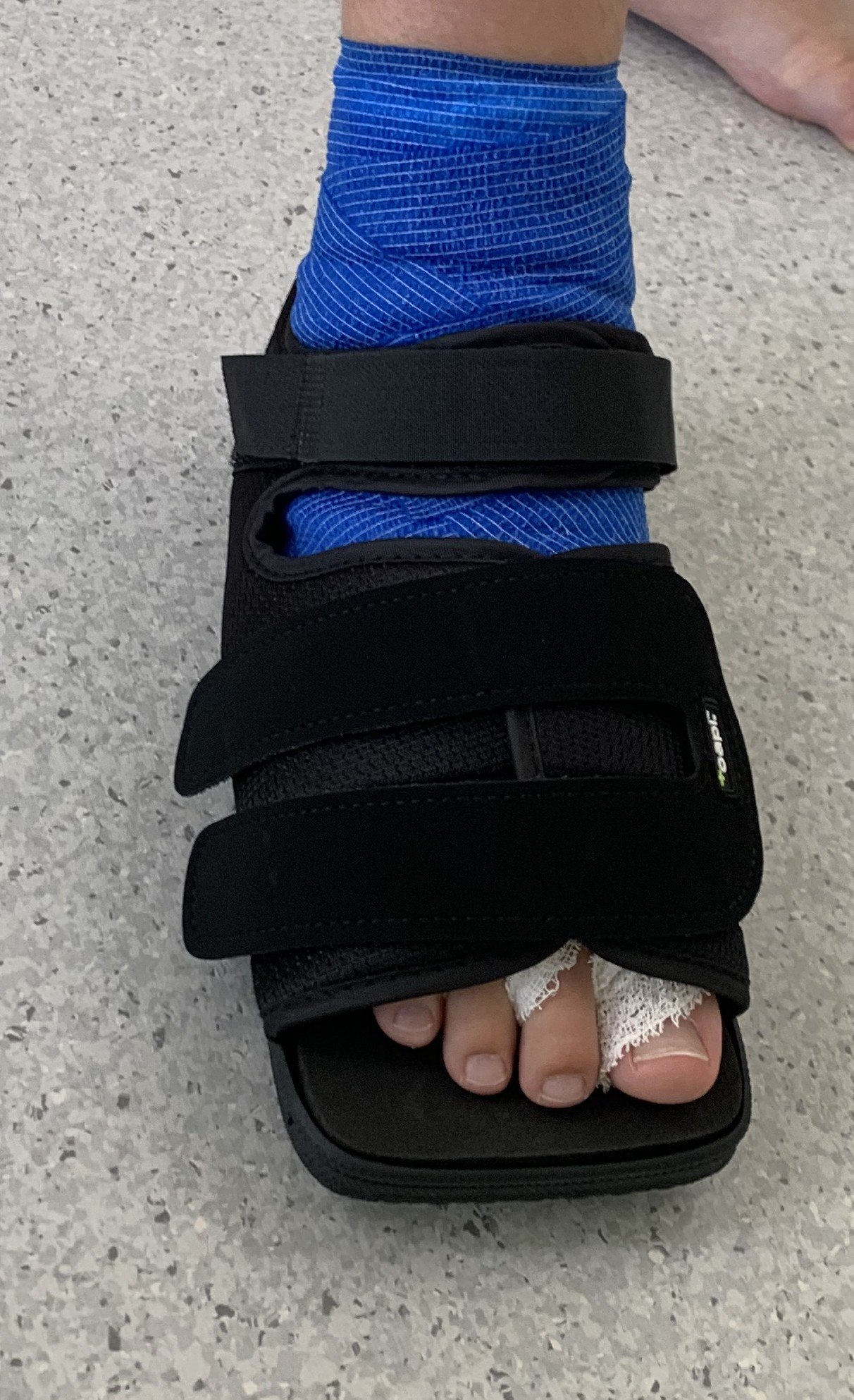
Example of a typical postoperative dressing and shoe
What is Hallux Rigidus
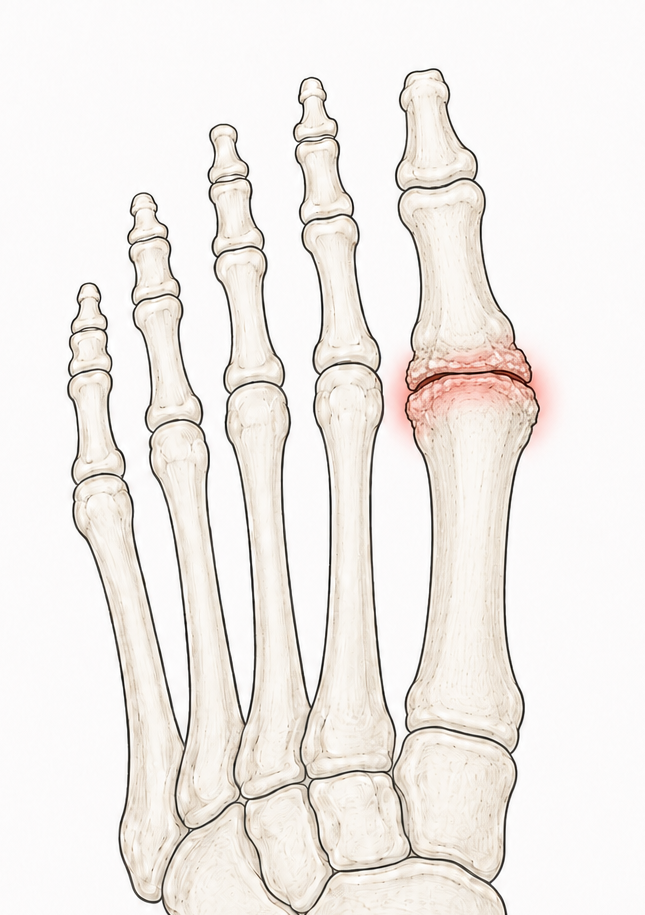
Hallux rigidus is osteoarthritis of the first metatarsophalangeal joint—the joint at the base of the big toe. As the cartilage deteriorates, the joint becomes painful and increasingly stiff. Bone spurs may also develop around the joint, particularly across its upper surface.
The term hallux refers to the big toe and rigidus describes the loss of movement that can occur as the condition progresses.
Common symptoms include:
Pain within the big toe joint during walking
Pain when the heel lifts from the ground
Stiffness or reduced upward movement of the big toe
A painful prominence over the top of the joint
Irritation from footwear
Difficulty running, climbing stairs, lunging or squatting
Pain that may eventually occur during ordinary walking or at rest
The severity seen on an X-ray does not always correspond directly with the severity of symptoms. Treatment decisions should therefore consider pain, function, joint movement, activity requirements and the condition of the remaining joint surfaces.
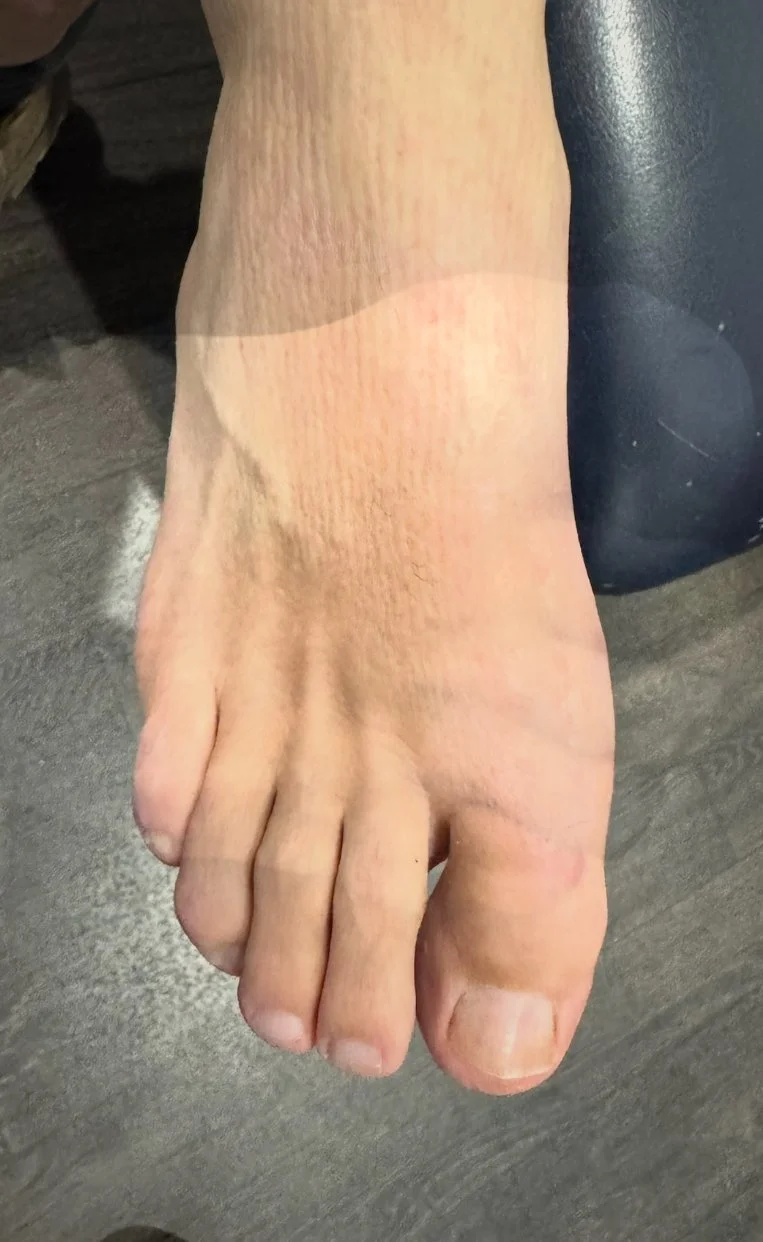
Example Arthrodesis procedure here is 12 weeks post-op