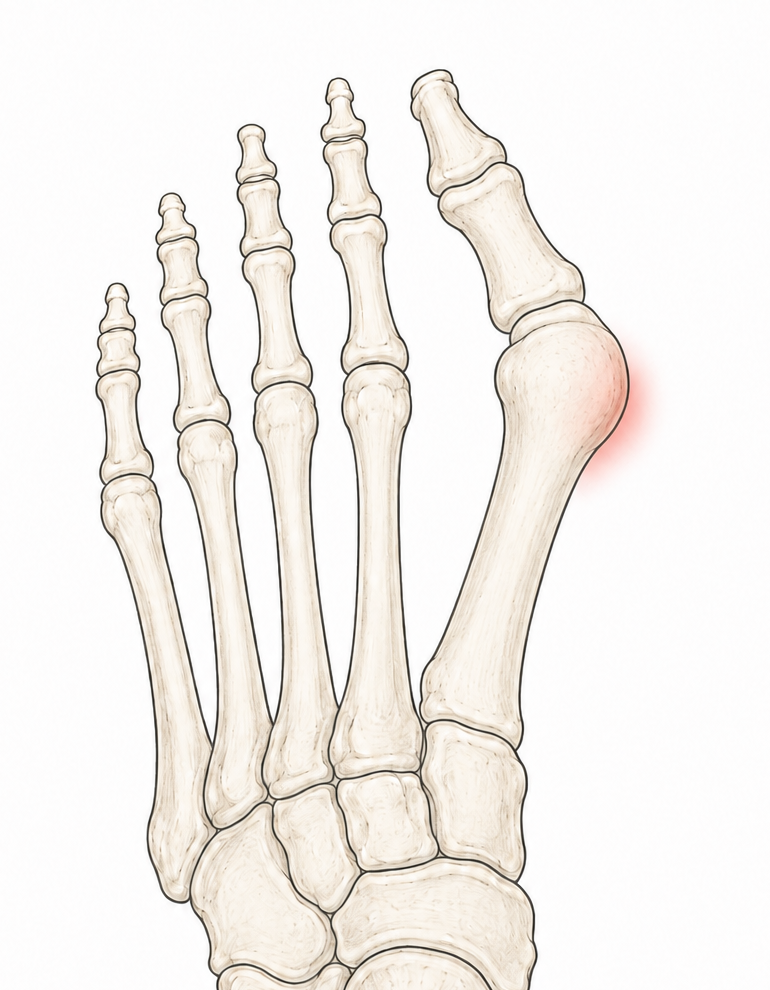
What is a Bunion
Hallux valgus—commonly called a bunion—is a progressive change in the alignment of the big toe joint. The first metatarsal gradually moves towards the inside of the foot, while the big toe moves towards the lesser toes and may also rotate.
The visible “bump” is therefore not simply an extra piece of bone it a progressive deformity
Some bunions remain painless. Others may cause:
Pain or inflammation over the prominence
Difficulty fitting footwear
Pain within the big toe joint
Reduced movement or stiffness
Crowding or deformity of the lesser toes
Pain beneath the ball of the foot
Reduced walking or exercise tolerance
Treatment should be guided by symptoms and functional limitation—not by appearance alone.
There are a variety of reasons why a bunion may have developed. This may include genetics, poor footwear, post-traumatic, and inflammatory conditions like rheumatoid arthritis to name a few.
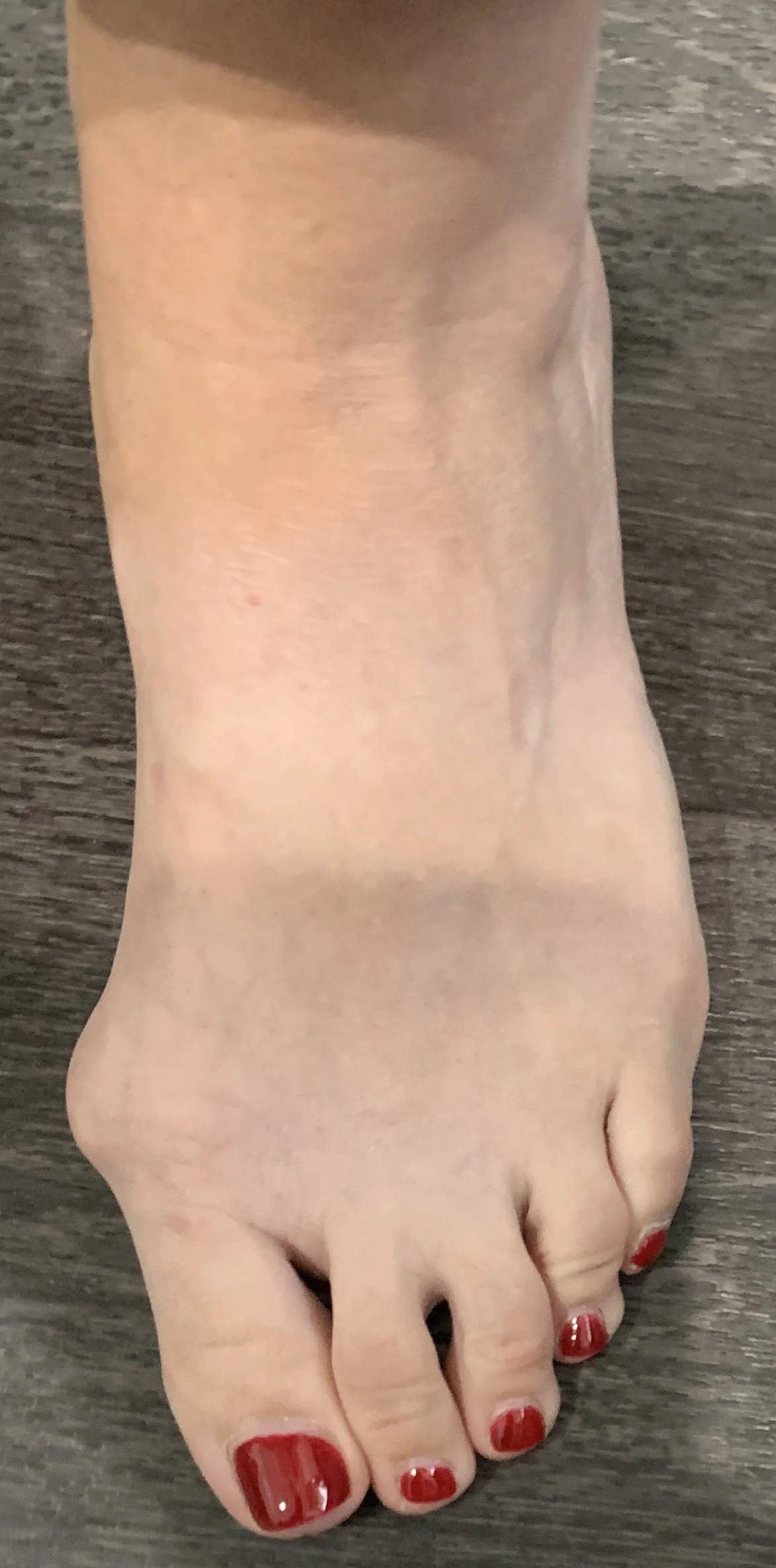
When is Surgery Considered
Surgery may be considered when hallux valgus causes persistent pain, recurrent irritation, difficulty wearing reasonable footwear or meaningful restriction of daily or recreational activities despite appropriate non-surgical care.Surgery is not usually recommended solely to improve the appearance of an otherwise comfortable foot.The timing of surgery is also an important consideration and should be discussed with your specialist
Outcomes from bunion surgery
Generally, favourable outcomes. Clinical studies generally report meaningful average reductions in pain after appropriately selected hallux valgus surgery. A recent systematic review of metatarsal osteotomies reported an approximate reduction in average pain scores from 7/10 before surgery to approximately 2/10 following surgery. These figures combine different procedures and patient groups and should not be interpreted as a promised individual result. As always, the risks of surgery vs the expected benefits need to be weighed for each individual.https://orthopedicreviews.openmedicalpublishing.org/article/158949-performance-of-distal-and-proximal-first-metatarsal-osteotomy-in-hallux-valgus-surgery-a-systematic-review-and-meta-analysis?utm
What to expect from the Procedure and recovery
A distal chevron osteotomy usually takes approximately 30–60 minutes in the operating theatre, although this may vary depending on the deformity and whether any additional procedures are required.
Following surgery, patients are generally permitted to place some weight through the operated foot in a surgical sandal. This is considered protected or partial weight-bearing rather than normal, unrestricted walking. Crutches or another walking aid may be required during the early recovery period.
A bulky compression dressing and surgical sandal are usually worn for the first three to four weeks. The dressing helps protect the surgical site, support the corrected position and manage postoperative swelling. Once the wound has healed adequately and early bone healing is satisfactory, patients can generally transition into a wide, supportive sports shoe. This type of footwear may be required for approximately the next two months.
Return to sedentary work may be possible considerably earlier, whereas occupations involving prolonged standing, walking, lifting or safety footwear may require a longer period away from normal duties.
Swelling commonly persists for several months and may temporarily restrict footwear even after the bone has healed. Recovery time varies according to the procedure performed, bone healing, postoperative swelling, occupation and individual health factors. Progression of weight-bearing, footwear, driving, work and exercise should therefore be guided by clinical review and postoperative imaging rather than time alone.
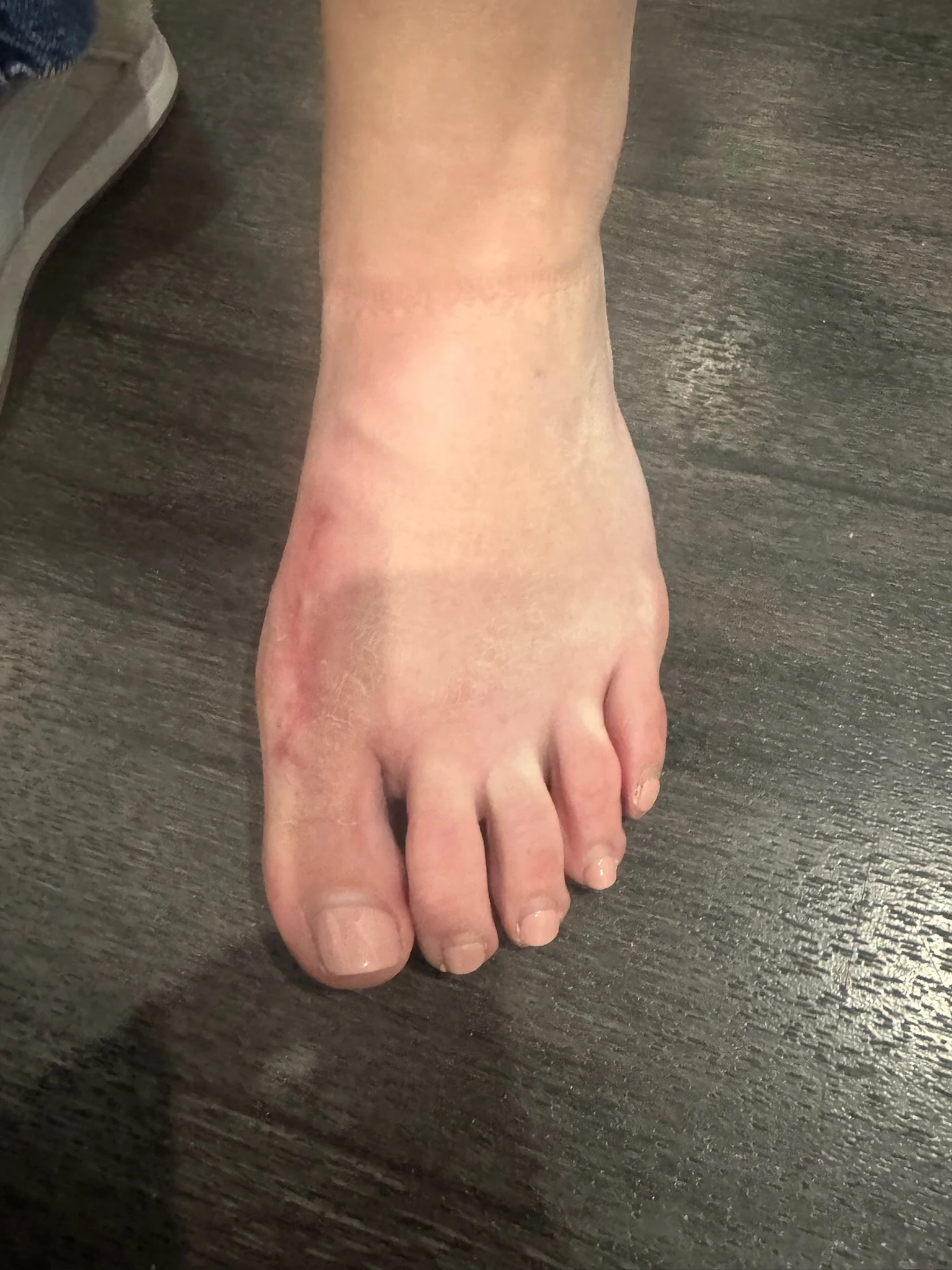
Example here is 8 weeks post-op bunion surgery