When is Surgery Considered
Surgery may be considered when a hammer toe causes persistent pain, recurrent corns or wounds, difficulty wearing reasonable footwear, or restriction of normal activities despite appropriate non-surgical management.
Non-surgical treatment may include wider and deeper footwear, protective padding, toe sleeves, orthoses and management of associated forefoot pressure. These measures can accommodate the deformity and reduce irritation but generally do not permanently straighten a fixed hammer toe.
The appropriate operation depends on whether the deformity is flexible or rigid and whether instability is present at the metatarsophalangeal joint.
Outcomes from surgery
Generally, favourable outcomes. Hammer toes vary from simple flexible deformities to complex deformities involving the metatarsophalangeal joint, and a broad range of surgical procedures may therefore be required. Both open and minimally invasive techniques have demonstrated meaningful improvements in pain, alignment and function. A recent randomised study found comparable clinical outcomes between open and minimally invasive correction, with more than 92% of toes demonstrating satisfactory alignment and bone healing. Earlier comparative research also reported similar alignment and patient satisfaction, with fewer infections following percutaneous surgery. Outcomes depend on the complexity of the deformity and the procedure required, and the risks must be weighed against the expected benefits for each patient.
https://link.springer.com/article/10.1007/s00402-025-06114-1?utm
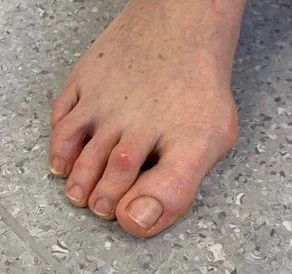
Example of typical painful skin irritation from hammer toe deformity 2nd toe
What to expect from the Procedure and recovery
Depending on the complexity of the deformity and the procedures selected, hammer-toe surgery may take approximately 10–45 minutes in the operating theatre. In selected cases, simple hammer-toe deformities may be suitable for a smaller in-office procedure under local anaesthetic, without requiring hospital admission. Suitability depends on the flexibility and complexity of the deformity, the patient’s general health and the procedure required.
Postoperative care also varies. Some patients require only a light dressing with taping or splinting to maintain the corrected position. In other cases, temporary wires may extend from the ends of the toes to stabilise the joints while healing occurs. These are generally removed in the clinic after approximately four to six weeks.
Walking is usually limited to protected or partial weight-bearing in a surgical sandal rather than normal, unrestricted walking. Crutches or another walking aid may be required, particularly when several toes or the metatarsophalangeal joint have been treated.
Recovery may take longer when surgery includes several toes, a metatarsal osteotomy, plantar plate repair or reconstruction of the metatarsophalangeal joint. Swelling and stiffness can persist for several months, and the toe may initially appear enlarged or slightly elevated while the tissues settle.
Return to footwear, driving, employment and exercise should be guided by clinical review and the procedures performed rather than time alone.
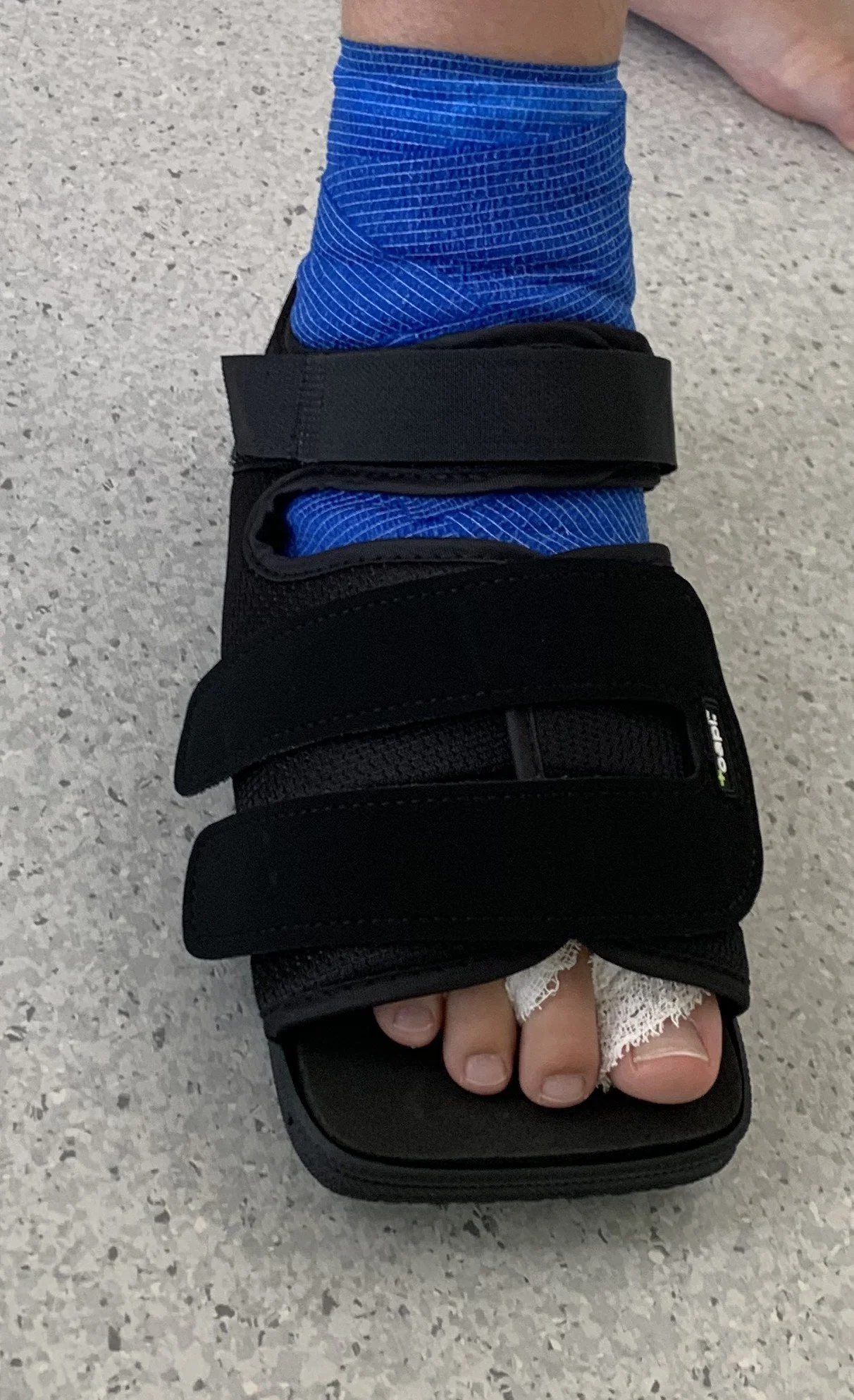
Example of a typical postoperative dressing and shoe
What are Hammer Toes
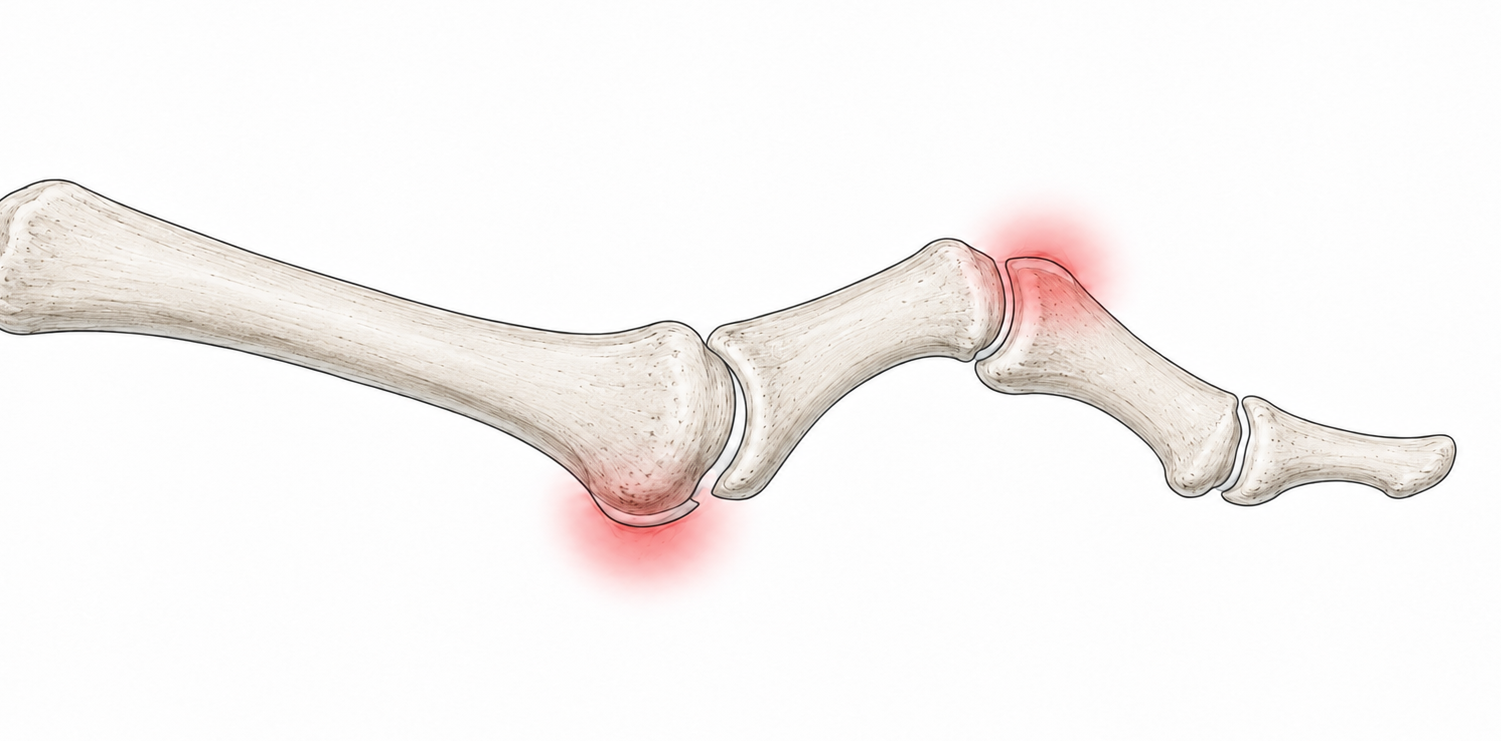
A hammer toe is a bent or contracted lesser toe. The deformity can range from relatively simple to more complex.
A simple hammer toe primarily involves the toe itself, most commonly producing a bend in the middle joint of the toes. It may initially remain flexible but can become increasingly rigid over time.
A complex hammer toe also involves the metatarsophalangeal joint, where the toe connects to the forefoot. This may be associated with soft-tissue contracture, tendon imbalance, plantar plate injury, bony deformity, joint subluxation or dislocation. In these cases, the toe may become elevated, cross over an adjacent toe or lose contact with the ground.
Symptoms commonly result from pressure and friction rather than the shape of the toe alone. These may include:
A painful corn or skin irritation over the dorsal proximal interphalangeal joint
Rubbing or pressure between adjacent toes
Pain or callus at the tip of the toe
Pain beneath the metatarsophalangeal joint
Redness, blistering, ulceration or recurrent skin breakdown
Difficulty fitting or comfortably wearing footwear
Progressive elevation, rotation or crossing of the toe
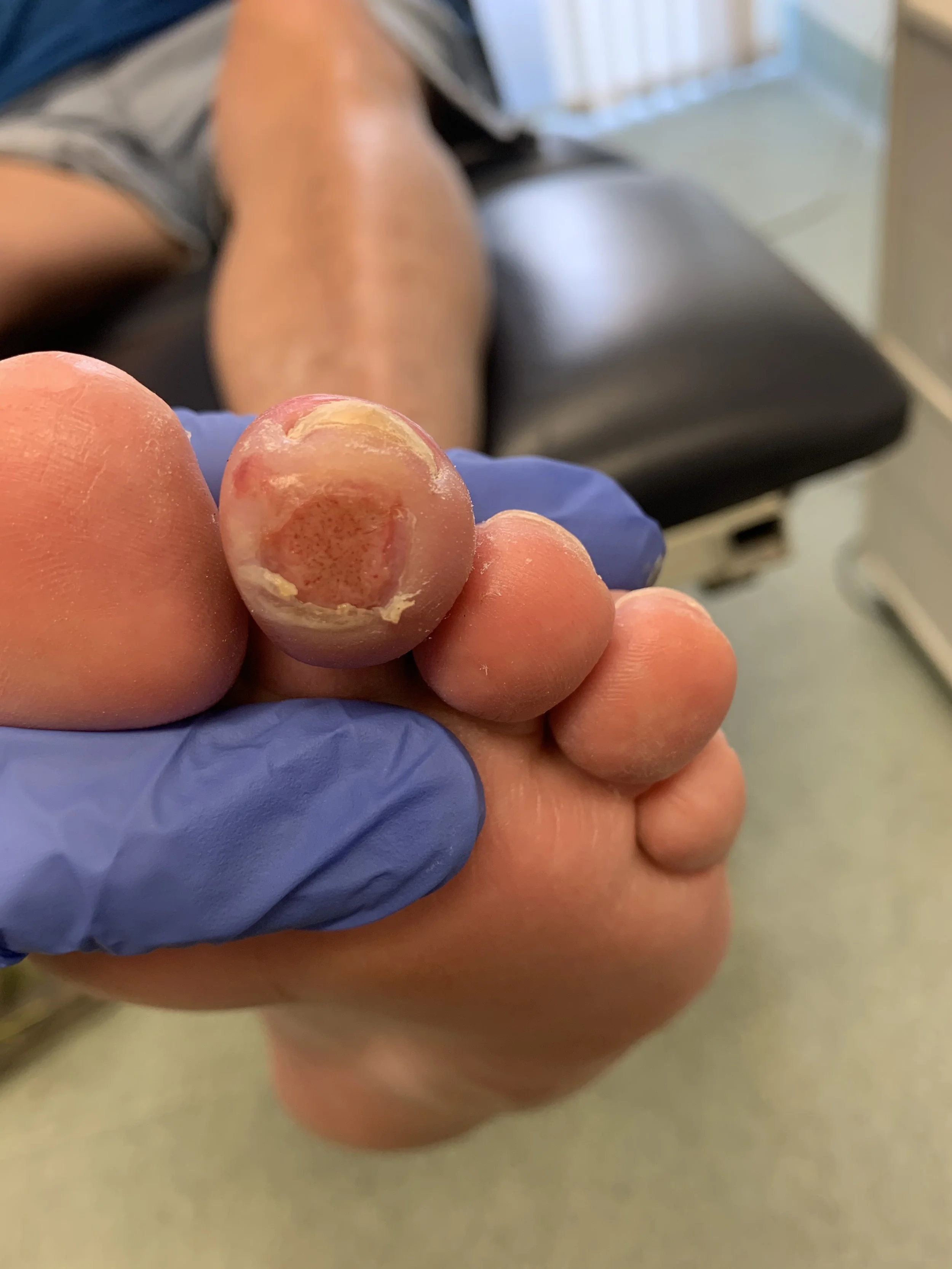
Example of soft tissue breakdown on the apex of the toe from a hammer toe deformity